Bathtub Reglazing

Bathtub Reglazing in the Northeast of the United States

The Northeast is full of good tubs wearing bad surfaces. We fix the surface and leave the tub.

The technician covering your area draws up the figure. It comes in writing, before any van is booked.

Price my bathtub
  • Free, nothing owed after it
  • Routed to the technician for your area
  • A written figure before any spraying

One callback from the trade, not a switchboard reading a script, and silence after that if you prefer. Two minutes of plain description are enough to price a standard tub.

Same tubit never leaves the bathroom
One working daymasking in the morning, gloss by evening
24 to 48 hoursfrom final coat to first bath
A fraction of replacingno demolition, no new plumbing bill

Reviving Your Worn Fixtures

Understanding The Process

Do you notice ugly stains on your vintage porcelain basin? This flaw ruins your whole room.

Thankfully, skilled contractors fix these issues fast. They apply fresh coatings to rescue your worn bath fixture.

Most folks wonder if replacing the whole unit makes more sense. Actually, spraying a new layer saves you lots of money.

Meanwhile, traditional replacement costs thousands of dollars in labor. Therefore, choosing a surface refresh keeps your hard-earned cash safely in your pocket.

Furthermore, tearing out old tubs ruins nearby tile walls. This means you avoid extra bathroom remodeling headaches completely.

Yet, you might worry about harsh chemical smells filling your house. Modern technicians use advanced ventilation fans to clear fumes right away.

Consequently, your indoor air stays fresh during the entire operation. This lets you breathe easy while workers improve your master bathroom.

Choosing The Right Finish

Selecting a brilliant white gloss brightens up dark spaces. Alternatively, you can pick almond colors to match older vintage tiles.

Whatever shade you choose, the new surface resists everyday stains. This guarantees your investment looks stunning for many years.

Plus, smooth sprayed layers prevent mold from hiding in microscopic cracks. You will spend less time scrubbing stubborn soap scum every weekend.

Instead, simple wiping keeps your basin shining like new. This gives you extra free time for your favorite weekend activities.

Besides that, slip-resistant treatments protect your family from dangerous falls. Safety matters just as much as visual appeal in wet areas.

Therefore, professional sprayers add textured bottoms upon request. This feature lets your kids bathe without any slipping worries.

Regional Service Details

Living around Northeast makes finding reliable local workers very easy. Homeowners throughout this historic area love upgrading their bathrooms.

Because regional winters bring freezing temperatures, indoor home projects boom. Fixing up your basin during cold months makes total sense.

Additionally, local contractors understand regional home styles very well. They bring years of hands-on experience right to your front door.

Most neighborhoods here feature homes built many decades ago. Original cast iron basins inside these properties deserve careful restoration.

Rather than tossing out sturdy vintage hardware, skilled crews make it shine. This preserves the classic charm of your historic residence.

Besides, regional properties often have unique architectural character. Keeping original fixtures intact maintains your home value effortlessly.

The Step By Step Method

First, workers arrive at your house with specialized cleaning gear. They scrub away decades of grime and mineral buildup thoroughly.

Next, technicians repair any chips or cracks using waterproof epoxy. This creates a perfectly smooth foundation for the fresh topcoat.

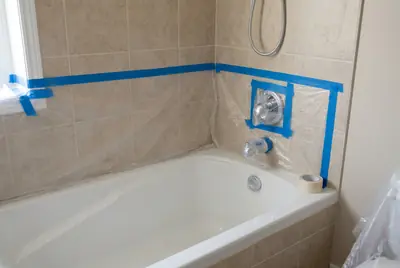
Afterwards, workers tape off surrounding walls and floors for protection. This prevents any accidental overspray from touching your bathroom tiles.

Then, a bonding agent goes on to secure the new layers. Chemical adhesion guarantees the finish never peels or bubbles up.

Finally, specialized spray guns apply multiple coats of glossy resin. This phase transforms your tired basin into a gorgeous centerpiece.

Within just one day, your washing area looks brand new again. You can use your upgraded shower after twenty four hours pass.

Comparing Options Table

Method Cost Time Required Durability
Full Replacement High One Week Permanent
Surface Spraying Low One Day Many Years
Plastic Liners Medium Two Days Moderate

Looking at this table clearly shows your best financial path. Spraying saves both time and money for busy homeowners.

Moreover, liners often trap water underneath and cause hidden mold. Opting for a sprayed coating avoids this nasty hidden danger entirely.

Truthfully, no plastic insert matches the rigid feel of porcelain. Your renovated basin feels solid and cold under your touch.

Furthermore, quality resins withstand heavy daily use without scratching easily. This gives you long-lasting peace of mind year after year.

On top of that, routine maintenance requires only mild liquid soap. Never use abrasive scouring pads that dull the glossy top layer.

Following this simple care routine keeps your fixture looking pristine. Your guests will assume you bought an expensive brand new basin.

Taking Action Today

Are you ready to transform your outdated washing space completely? Professional contractors offer friendly consultations to answer all your questions.

Best of all, you can request a FREE quote right now. Knowing the exact pricing upfront helps you plan your budget wisely.

Simply reach out online to schedule your complimentary estimate appointment. Local pros will visit your home to inspect your worn basin.

They measure the surface area and calculate your exact project pricing. This no-obligation visit ensures you feel totally comfortable moving forward.

Stop staring at those embarrassing rust stains and ugly scratches daily. Reclaim your pride in your home with a stunning surface makeover.

Act today and enjoy a gorgeous spa-like bathroom very soon. Your family deserves a clean and beautiful space for daily relaxation.

Prep decides everything

Three quiet stages carry the whole result. They are also the ones nobody sees in the after photo.

The surface earns the coating

Stage 1 of 3

The surface earns the coating

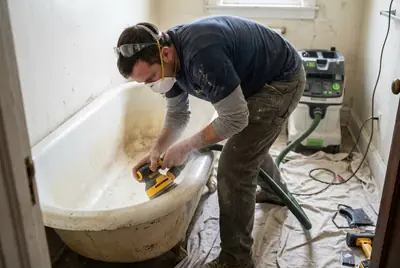
A reglaze fails or lasts on what happens before the gun comes out. The old surface gets scrubbed of soap film and silicone, etched or primed so the new material has something to grip, then wet sanded until it feels like fine paper. Skip any of that and the prettiest coat in the world lets go within a year, which is exactly the story most peeling tubs tell us.

Damage is filled, not painted over

Stage 2 of 3

Damage is filled, not painted over

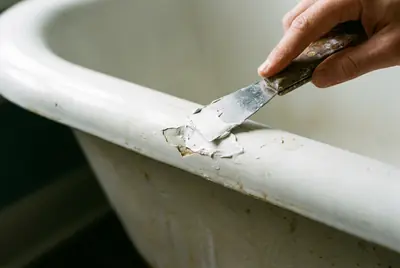
Chips, rust blooms and worn drain rings are ground back to sound material and rebuilt with polyester filler, then sanded flush until a fingertip cannot find the spot. Coating over damage only photographs well on day one; a repair you cannot feel is what keeps the finish honest for years.

A controlled spray, not a brush

Stage 3 of 3

A controlled spray, not a brush

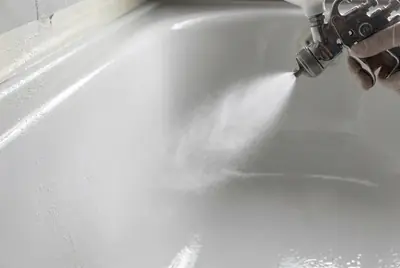
The topcoat goes on in fine sprayed passes with an extractor pulling air out the window the whole time. Sprayed layers flow together into one even skin, which is why the result reads as gloss rather than as paint. Brushes and rollers leave the texture that gives cheap refinishing its reputation.

Reglaze, liner or new tub

Three real ways out of a worn tub. We only do the first one, so the other two columns are simply what we would tell a friend.

The questionReglazing in placeAcrylic linerFull replacement
What a standard tub costs$350 to $800$1,600 to $4,000$3,000 to $10,000 once walls and plumbing join in
Bathroom out of actionOne day, then the cureWeeks of lead time, then a fitting dayOne to two weeks of trades
Demolition involvedNone at allNone, but the old tub is sealed insideWalls opened, floor patched, debris hauled
Honest life expectancyFive years and up when cared forLong, unless water creeps between the shellsDecades
Watch out forPrep shortcuts by cut-rate crewsA spongy feel and hidden moistureThe budget doubling mid-project

If your tub is cracked through, actively leaking underneath, or you simply want a different fixture, reglazing is the wrong tool, a verdict you will hear on the very first callback.

Six passes over one bathtub

Deep clean and etch

Pass 1

Deep clean and etch

Soap scum, silicone and old wax stripped, then the surface etched or bonded so the coating can bite.

Chip and rust repair

Pass 2

Chip and rust repair

Every ding ground out, filled and sanded flush. The repairs disappear under the coating instead of through it.

Masking the room

Pass 3

Masking the room

Tile, faucet, floor and glass papered off. Overspray lands on masking paper, never on grout or chrome.

Sprayed finish coats

Pass 4

Sprayed finish coats

Primer, then gloss coats laid on in thin passes until the surface reads as one poured skin.

The cure window

Pass 5

The cure window

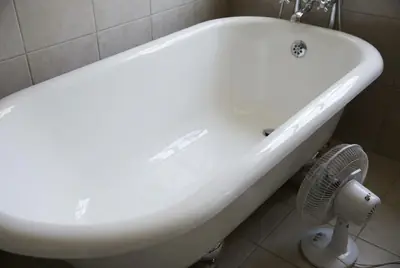
The finish hardens on its own clock, 24 to 48 hours. We tape the door and leave the tub in peace.

Fresh caulk lines

Pass 6

Fresh caulk lines

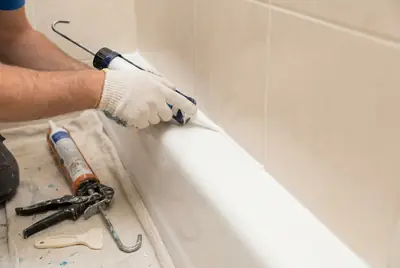
Old caulk goes out with the old finish. A new mildew-resistant bead seals tub to tile on the way out.

Refinished, not reborn

A reglazed tub is your old tub wearing a professional coating. That is a fine thing to be, as long as everyone knows it going in.

What the new surface is

A sprayed acrylic urethane skin, bonded to prepared porcelain, steel or fiberglass. It is smooth, glossy, warm to the touch and fully waterproof. Done properly it gives five years and more of daily service, and plenty of our tubs sail well past that with nothing but gentle cleaning.

What it is not

It is not factory enamel fired onto iron at kiln temperatures, and no honest refinisher will tell you otherwise. It can be scratched by grit, dulled by harsh powders and lifted by standing water in a spot where caulk has failed. It is a durable coating, not a new tub, and it is priced like one.

The habits that stretch it

  • Clean with liquid bathroom cleaner and a soft cloth; abrasive powders and scouring pads are the finish's only real predators.
  • Skip suction-cup mats, or at least lift them out after the bath. Trapped water works on any coating given enough weeks.
  • Fix a dripping faucet early. A steady drip wears a track in the gloss the way it would wear a stone.
  • Rinse and wipe after bath oils and hair dye; both stain slowly when left to sit.
  • Tell us about the first chip, not the fifteenth. Spot repairs on our own finish are quick and cheap.

The whole job, measured in your time

Two minutes

You ask for the figure

ZIP, what the tub is made of, what bothers you about it. A short request starts it, and a photo can follow later if the case is odd.

The callback

The figure, in writing

The technician who would do the work asks his questions on the callback and names a firm figure for a standard job, confirmed in writing before any van is booked.

You set the date

The morning of

One van, one technician, drop cloths from the front door to the bathroom. Water off for nothing; only the tub is out of service.

Most of that day

Repair, mask, spray

Damage filled and sanded, the room masked, extractor running, then the primer and gloss coats go on in thin, even passes.

24 to 48 hours

Cure and caulk

The finish hardens untouched, the new caulk bead goes in, and you run the first bath knowing exactly what was done and what to expect of it.

What the work runs

What we quoteTypical rangeReading the number
Standard bathtub, reglazed complete$350 - $800Clean, etch, repairs, sprayed gloss and fresh caulk.
Chip or rust repair alone$150 - $300When the finish is sound and only one wound needs closing.
Clawfoot tub, inside and out$700 - $1,300Two surfaces, more masking, and paint-grade feet if you wish.
Shower pan or base$300 - $550Same process on the floor you stand on every morning.
Caulk renewal with the job$90 - $180Old bead cut out, mildew-resistant line laid in.
Small job minimumaround $250The van, the materials and the cure time exist even for tiny work.

Heavy previous coatings that must be stripped, unusual colors and badly pitted iron push a job toward the top of its bracket. The written price reaches you before the van is even loaded, and it holds.

How we stand behind a coating

Ventilation is not a courtesy, it is part of the job. The extractor runs from the first solvent wipe to the last sprayed pass, pulling air out the window instead of through your hallway, and the technician wears supplied air even when the household has gone out for the day. By the evening the bathroom smells like a bathroom again.

The materials are the professional two-part systems made for this trade, mixed fresh on site, never the single-can kits sold next to the paint rollers. It is the difference between a finish that cures into a hard skin and one that stays soft enough to peel at the drain within a season, and it is most of the reason our work carries a written workmanship promise against peeling and loss of adhesion.

And the schedule respects the cure. We tell you in writing when the tub goes back into service, 24 hours for most jobs and 48 for the cautious ones, because handing a family a beautiful surface and letting them ruin it that same night helps nobody. If anything in our workmanship lets go early, the technician comes back and makes it right without a discussion about whose fault the water was.

Asked while we tape the paperwork

  1. How bad is the smell, honestly?

    Strong while spraying, gone surprisingly fast. The extractor vents the room to the outside for the whole job, so the rest of the home stays livable, and by the next morning the odor has left with the fumes. Pregnant households and bird owners get the frank version of this talk before booking.

  2. When can we actually use the tub?

    Between 24 and 48 hours after the final coat, and the exact time is written on the paperwork you keep. The first bath is not a gamble; it is a date.

  3. Can the color change, or only refresh?

    Any color. The most common request is retiring an avocado, pink or almond tub to white, and the coating is tinted before it is sprayed, so the new color is in the material rather than painted over it.

  4. Do fiberglass and acrylic tubs qualify?

    Yes. The prep changes, the primer changes, the result reads the same. Fiberglass with soft, flexing spots gets extra reinforcement talk first, because coating a moving floor is how warranties die.

  5. The tub was coated before and peeled. Now what?

    Now the old coating comes fully off, which is honest work we price plainly, and then the job proceeds as if the tub had never been touched. Peeling almost always means the first crew skipped the etch or sprayed over silicone, not that your tub rejects coatings.

  6. Is five years all I should hope for?

    Five years is the floor we are comfortable promising out loud, not the ceiling. With soft cleaners, no standing mats and caulk kept sound, these finishes routinely serve a decade. What we refuse to do is whisper twenty and hope you lose our number.

The streets around Northeast

Zoom for the lay of the land; the link lists further down name every community the van reaches from here.

A shine owed to every state of the Northeast

Where the clawfoots live: cities of the Northeast

Somewhere under that worn surface is the tub you chose. One day brings it back.

Get my written figure